

Surface Preparation Affects the Final Jewelry Appearance
Polishing and surface finishing are important production stages because defects left on the metal can remain visible after plating or final assembly.
Velcena Jewelry handles polishing and related finishing work for fashion jewelry including earrings, necklaces, rings and sets, bracelets, brooches, charms, anklets and selected hair jewelry. The exact finishing requirement depends on the base material, product construction and approved surface appearance.
Bulk production follows the approved sample and confirmed specification. Before finishing begins, cast or formed components should already have the required dimensions, structure and connection points. Products entering this stage may come from Casting & Metal Forming or other component preparation processes depending on the jewelry style.
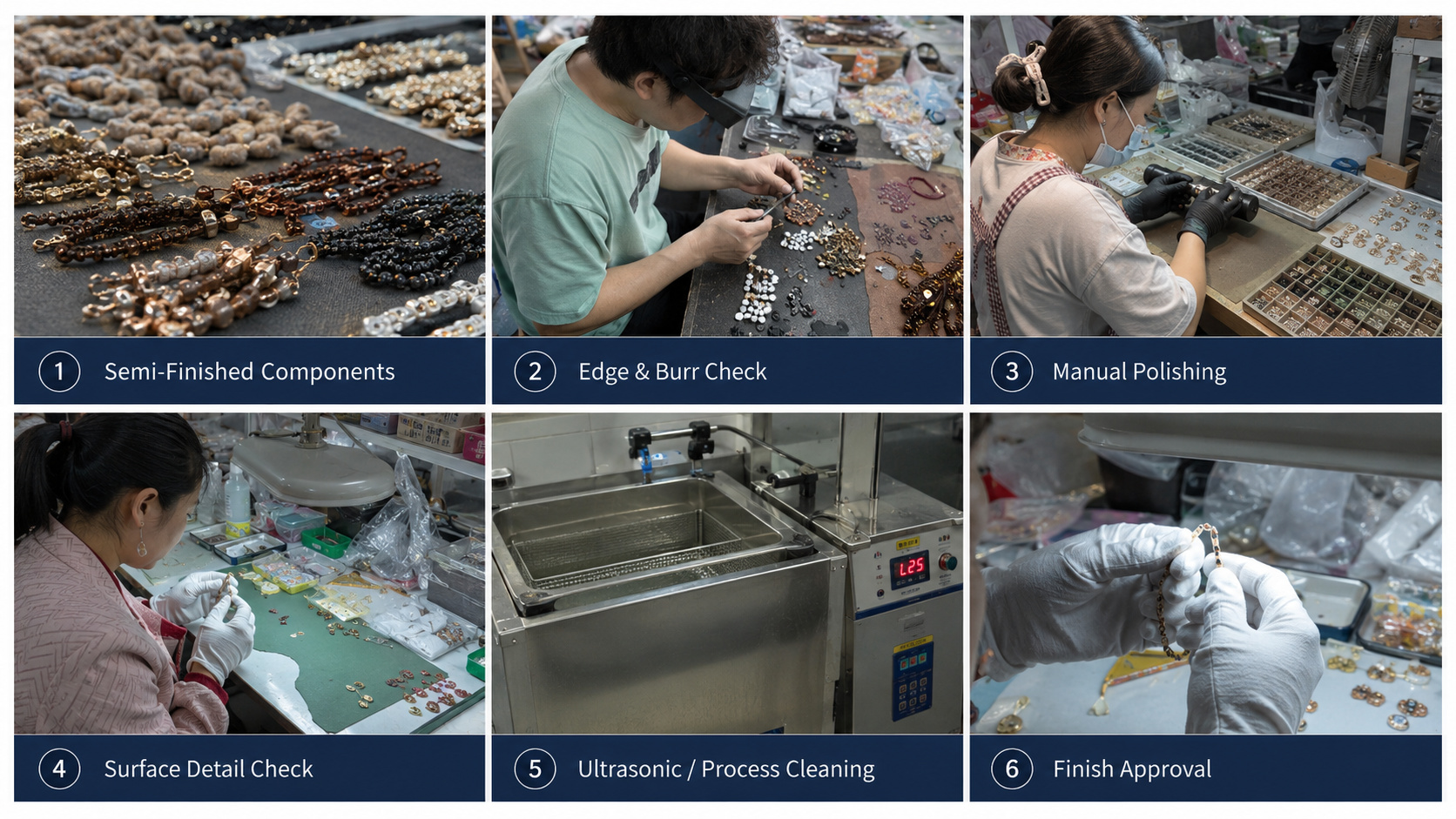 Edge, Burr and Surface Condition Check
Before polishing, semi-finished jewelry components are checked for visible irregularities that could affect the next process.
Depending on the design, attention may be given to:
- Rough edges
- Burrs from forming or trimming
- Uneven connection areas
- Surface marks
- Weld or joint areas
- Areas close to stone settings or decorative details
The objective is not only to make the product look brighter. Surface preparation should also create a consistent base for subsequent plating, assembly or decorative finishing.
Small earrings, thin charms and detailed brooch components may require different handling from larger pendants, rings or bracelet parts.
Polishing and Surface Refinement
Polishing machines are used for relevant jewelry styles to improve surface smoothness and appearance before the next manufacturing stage.
The required degree of polishing depends on the approved sample. Highly reflective designs require more attention to scratches and uneven areas, while matte or other approved finishes need a different surface reference.
Over-polishing should also be avoided because excessive material removal can affect edges, dimensions or fine design details. For this reason, surface appearance is checked together with the product structure rather than treated as an isolated cosmetic step.
The wider production sequence can be reviewed on our Jewelry Production Process page.
Cleaning Before Plating or Assembly
After polishing and handling, relevant products may require cleaning to remove polishing residue, dust or other surface contamination.
Velcena Jewelry uses ultrasonic cleaners for applicable production stages. Clean components help provide a more stable surface for subsequent finishing and make inspection easier before plating or assembly.
The exact cleaning and preparation sequence varies according to material and jewelry construction.
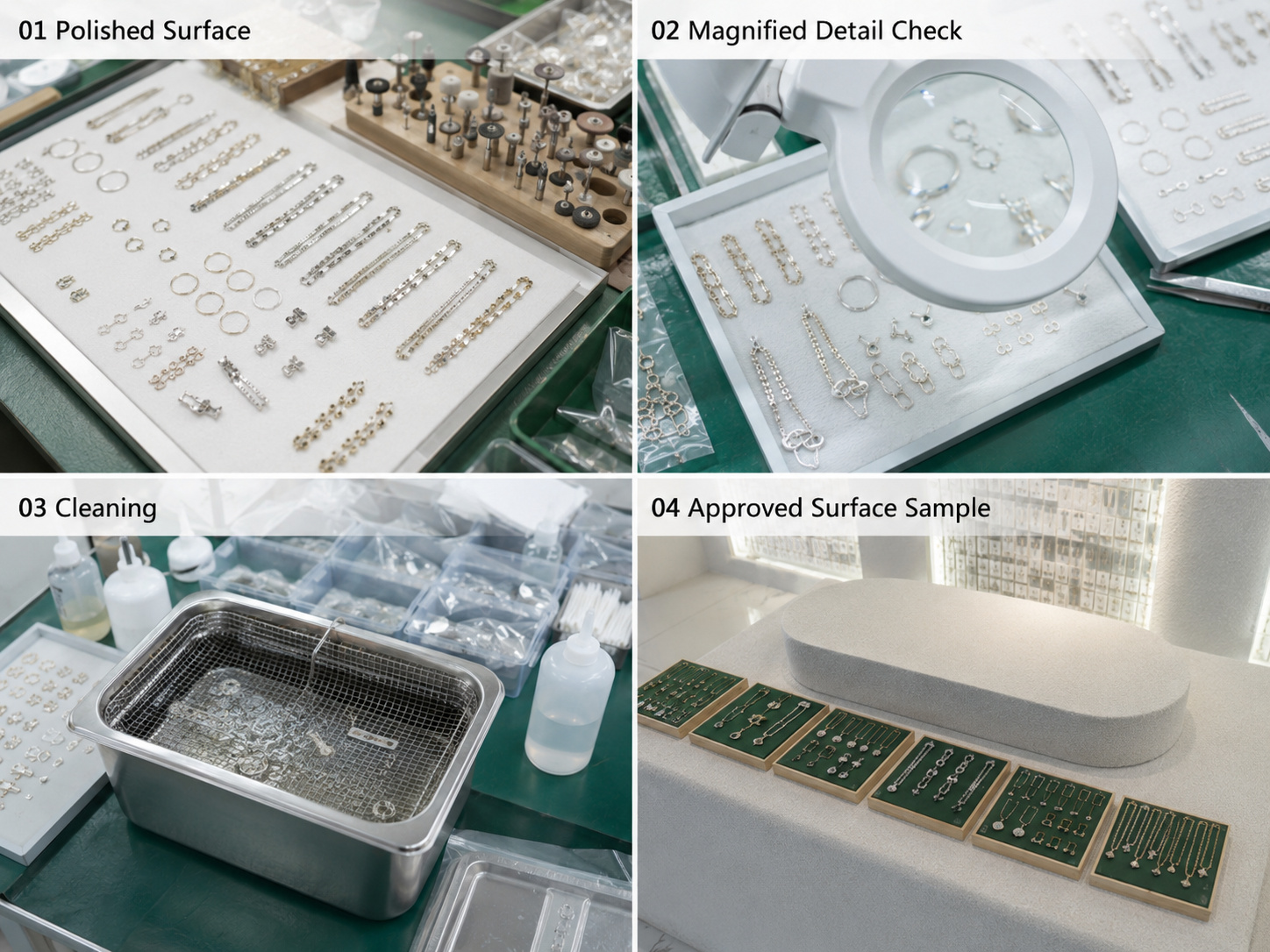 Surface Approval Before the Next Process
Before components continue to plating or assembly, representative pieces should be checked against the approved sample.
Inspection points may include:
- Surface smoothness
- Edge condition
- Visible scratches
- Consistency between pieces
- Weld or connection areas
- Overall appearance
Products requiring plating then move to the appropriate Jewelry Plating & Coating process according to the approved finish requirement.
Final appearance is checked again later during Quality Inspection, because plating, stone setting and assembly can introduce additional visible differences after polishing has been completed.
How Finishing Complexity Affects Production
Detailed surfaces, multiple components, highly reflective finishes or complex decorative structures can require additional polishing and inspection time.
Typical bulk production is around 25–35 days after sample approval, but the final schedule depends on quantity, construction, finishing, stone setting and packaging requirements.
For quotation or sample development, buyers should provide the jewelry reference, material, dimensions, target finish and estimated quantity so the required surface preparation can be reviewed before production.