

Plating Follows the Approved Finish Sample
Plating is one of the most visible parts of a jewelry specification. Even when dimensions and construction are correct, differences in color, brightness or surface preparation can make bulk pieces look inconsistent with the approved sample.
Velcena Jewelry supports plating and surface-finish requirements for fashion jewelry including earrings, necklaces, rings and sets, bracelets, brooches, charms, anklets and selected hair jewelry. Our main material range includes zinc alloy, brass and stainless steel, with selected 925 sterling silver styles.
The required finish is confirmed during sampling according to the jewelry design, base material and order specification. Bulk production then follows the approved physical sample as the visual reference.
Before plating, relevant metal components should already have passed the required Polishing & Surface Finishing stages.
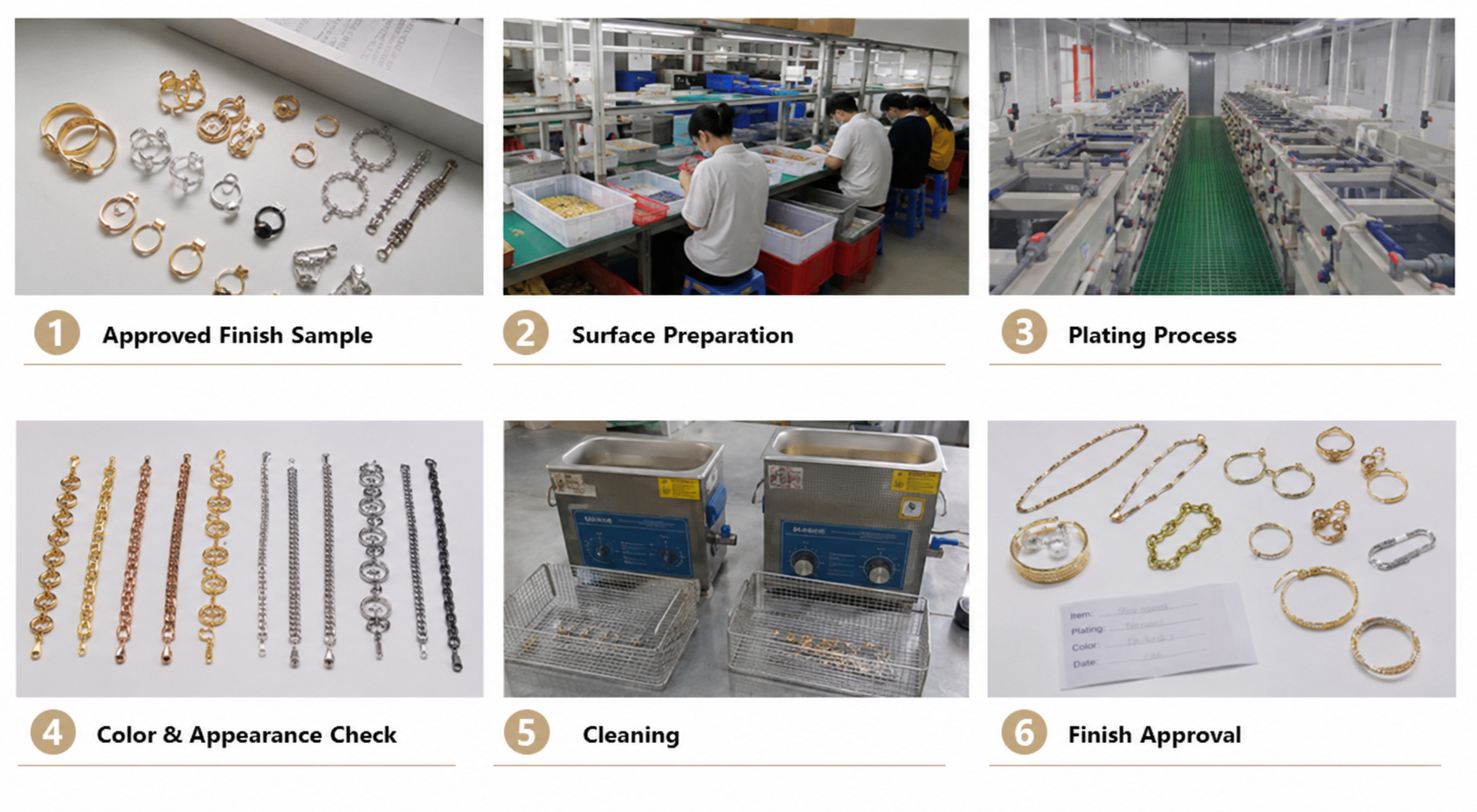 Surface Preparation Before Plating
A plated finish can only be as consistent as the surface underneath it.
Before this stage, jewelry parts are checked for visible scratches, rough edges, polishing marks and other surface defects that may remain visible after finishing. Components may also require cleaning to remove polishing residue or contamination before the required finish is applied.
Different product structures can need different preparation. A smooth pendant surface, detailed brooch, thin earring component and stone-setting structure should not automatically be treated as the same finishing job.
For this reason, plating is coordinated with the material, construction and approved sample rather than treated as a separate decorative step.
Plating Color and Appearance Confirmation
Terms such as “gold color” or “silver color” are not precise enough for production approval.
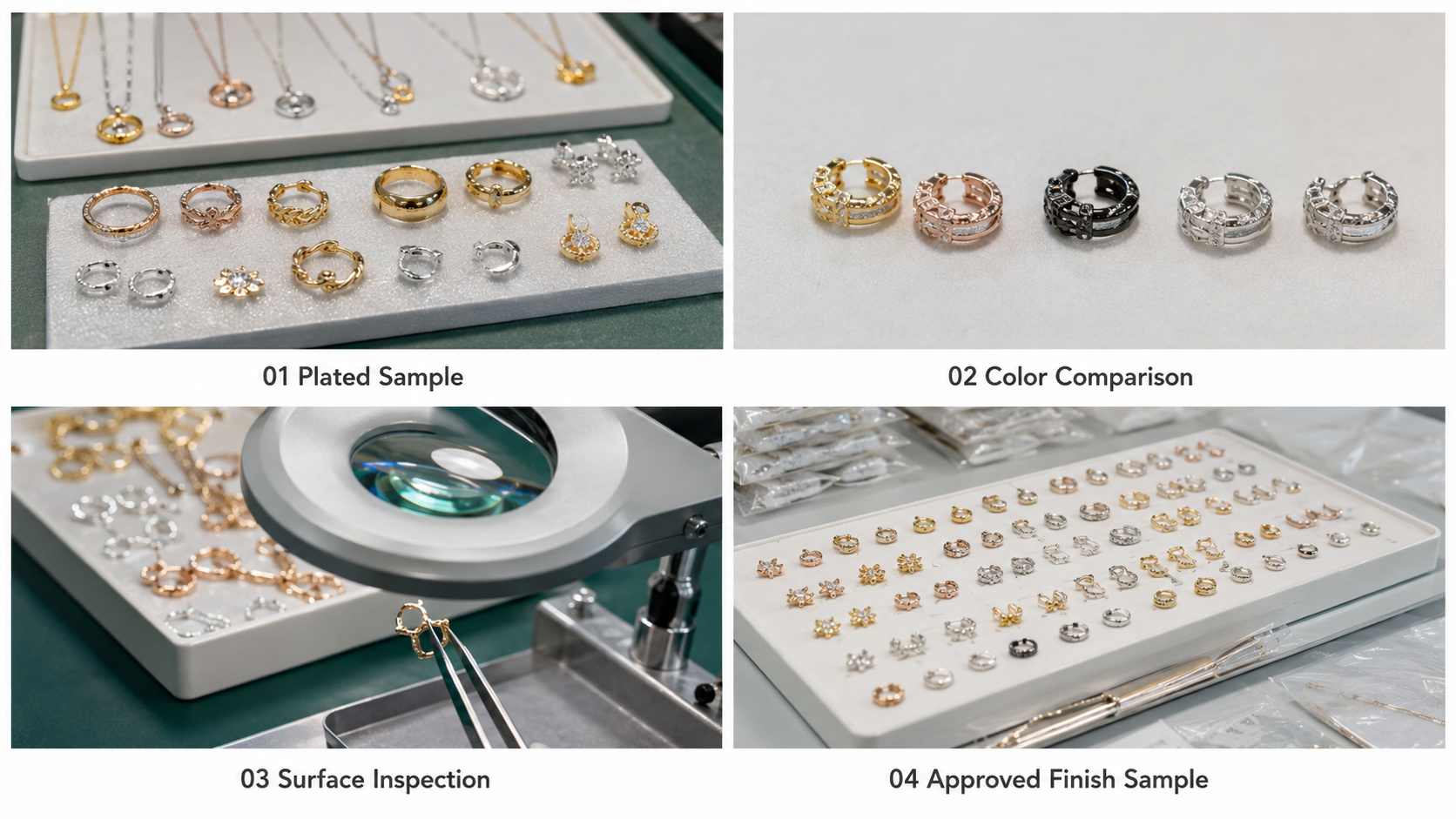
The buyer should confirm the required plating color and overall surface appearance on a physical sample. Important points can include:
- Plating color
- Brightness or approved surface effect
- Coverage around edges and recessed areas
- Visible surface consistency
- Appearance around connection points
- Match with stones and decorative components
If several finish versions are being considered, side-by-side samples provide a more reliable reference than photographs alone because lighting can change the appearance of metal colors.
Custom finish requirements can also be reviewed through our Material & Finish Customization page.
Inspection After Plating
After finishing, representative pieces are checked before they continue to stone setting, assembly or final packing.
Inspection focuses on whether the product matches the approved sample in overall appearance and whether obvious finishing defects are present. Checks may include color consistency, surface condition, incomplete coverage and visible marks.
Products with stones, charms, chains or other components then move into the relevant Stone Setting & Component Assembly stage.
 How Plating Requirements Affect Sampling and Production
Plating requirements can influence sample time, production planning and cost because the result depends on the base material, jewelry structure and requested finish.
Typical sampling takes around 7–15 days depending on the complete project requirements. Standard bulk production is usually around 25–35 days after sample approval.
Late changes to plating color or surface appearance may require another sample round before mass production continues.
For quotation, buyers should provide the jewelry reference, base material, required finish, estimated quantity and any approved physical sample or finish reference available. Final plating appearance is checked again during Quality Inspection before packing.