

From Approved Design to Metal Components
Casting and metal forming are used for selected jewelry styles where the shape, structure and material require a defined metal component before polishing, plating or assembly.
Velcena Jewelry manufactures fashion jewelry including earrings, necklaces, rings and sets, bracelets, brooches, charms, anklets and hair jewelry. Depending on the product, production may use cast parts, formed metal components, prepared chains, findings or a combination of these methods.
Before this stage begins, the approved sample, dimensions, material and construction are reviewed so the production team has a clear reference. New shapes may also require mold development before the first production pieces are prepared.
The complete order sequence is explained on our Jewelry Production Process page.
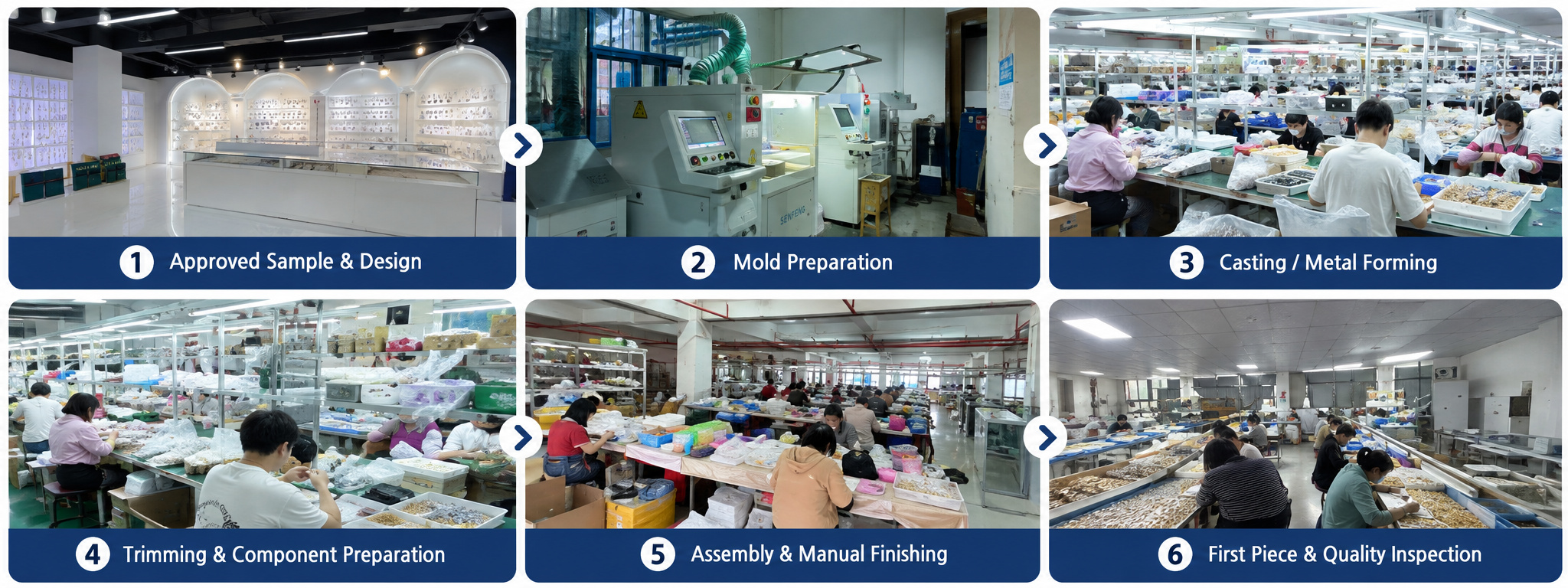 Mold and Production Preparation
Not every jewelry design requires a new mold. Existing constructions may use available components, while a new pendant, charm, decorative part or structural shape may require dedicated mold work.
Before mold preparation, key points normally include:
- Overall dimensions
- Product thickness
- Connection points
- Stone or decorative component positions
- Logo or engraving area where relevant
- Required assembly structure
These details should be confirmed before production because changes after mold preparation can increase sampling time and development cost.
Casting and Forming According to the Jewelry Structure
For selected products, casting is used to create the basic metal body before further finishing. Other styles may rely more heavily on metal forming, prepared chains, findings or separate components.
The exact process depends on the material and construction rather than one standard method for every jewelry category.
After casting or forming, parts may require trimming, edge preparation, drilling, connection preparation or other secondary work before they can move into assembly.
The objective at this stage is not the final decorative appearance. The priority is producing a component with the correct shape, dimensions and structural features for the next manufacturing steps.
Component Preparation and Pre-Assembly
Many jewelry products contain several parts rather than one single cast component.
Chains, clasps, hooks, posts, pins, charms, stone settings and decorative elements may need to be matched and prepared before assembly. Depending on the design, spot welding or preliminary connection work may also be required.
Component compatibility is important because a small difference in hole size, connection position or thickness can affect assembly efficiency and product function during bulk production.
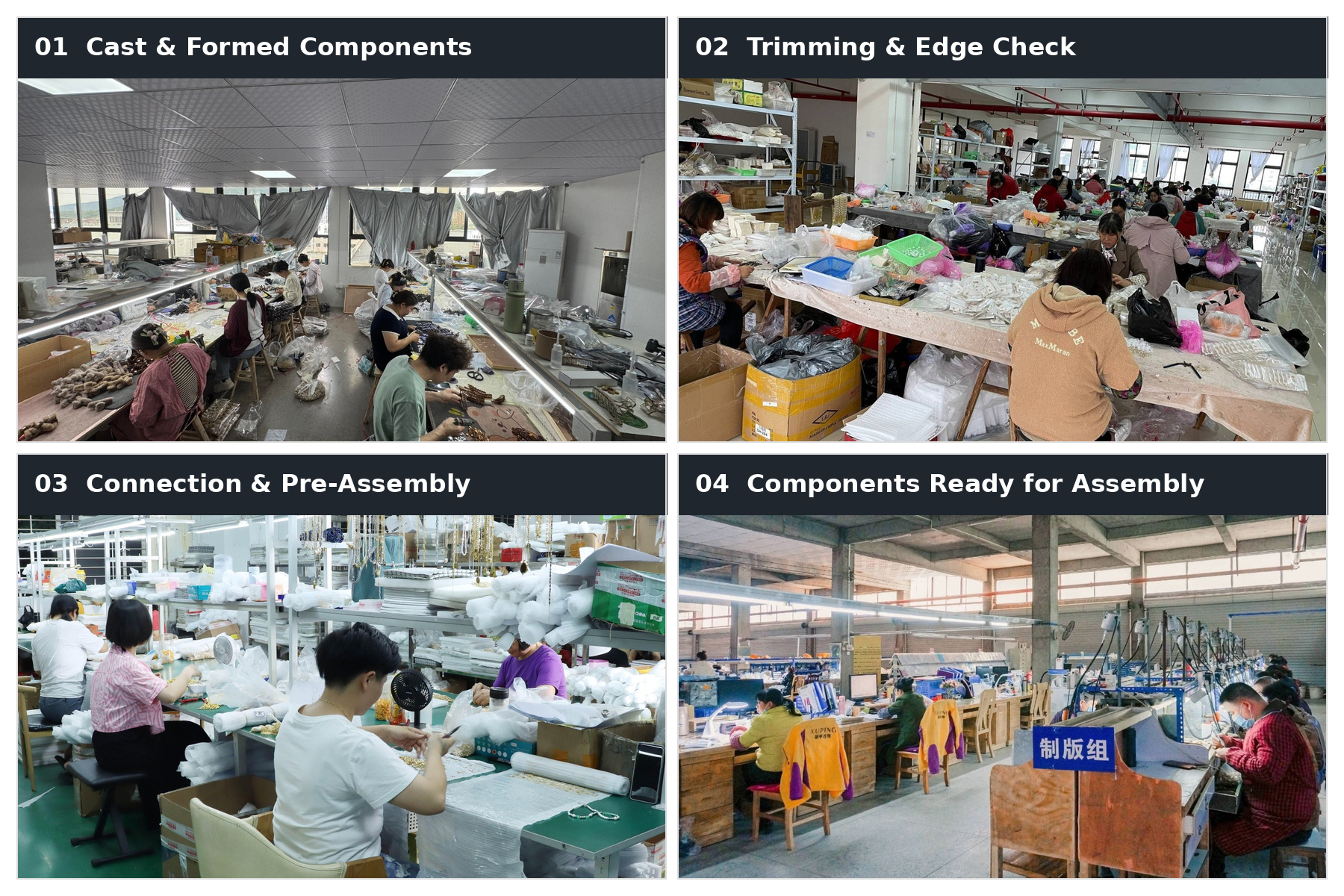 First Piece and Structural Inspection
Before large quantities continue into finishing, representative first pieces should be checked against the approved sample.
Inspection points can include:
- Dimensions and proportions
- Shape and symmetry
- Edge and surface condition
- Connection positions
- Component fit
- Structural function
Parts that pass this stage can then move into Polishing & Surface Finishing and later assembly or plating according to the order specification.
How Casting Requirements Affect MOQ and Lead Time
Typical jewelry MOQ is around 100–300 pcs per style. Projects involving new molds, deeper structural development or more complex components generally start from around 300–500 pcs or above.
Sampling normally takes around 7–15 days, while bulk production is usually around 25–35 days after sample approval. New mold development or structural revisions can extend this timeline.
For quotation, please send the design or reference, dimensions, preferred material, estimated quantity and any structural requirements. These details allow us to review whether casting, forming, existing components or new mold development is the practical production route.