

Confirm the Material Before Sampling
Material selection affects product weight, surface appearance, plating performance, structure, cost and MOQ. For OEM and private label jewelry projects, we recommend confirming the base material before the approval sample is finalized.
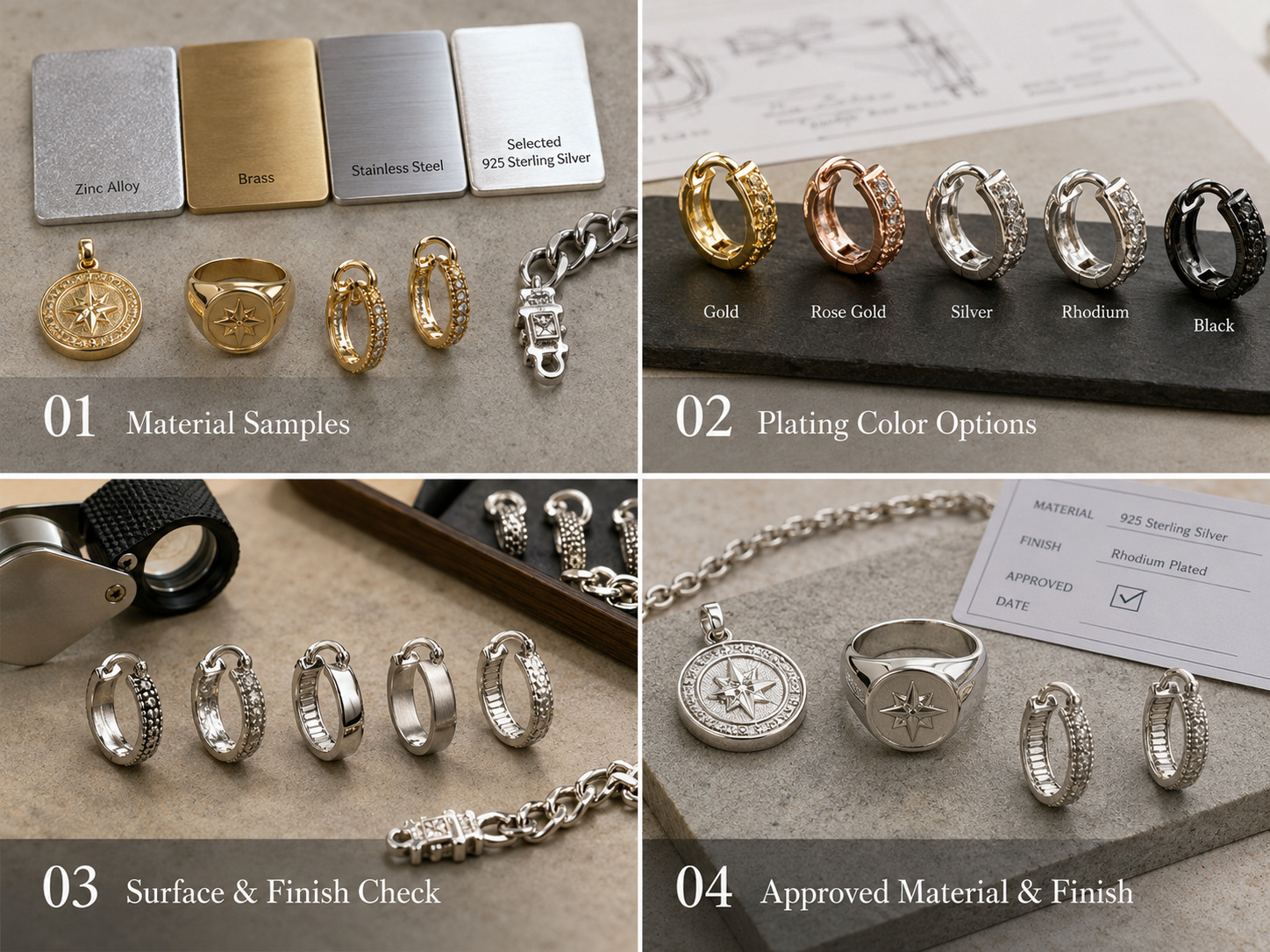
Velcena Jewelry mainly develops fashion jewelry in zinc alloy, brass and stainless steel, with selected 925 sterling silver styles. The suitable material depends on the design, target price level, dimensions, finishing requirement and expected order quantity.
We do not recommend selecting material only from a photo. Two jewelry pieces with a similar appearance may require different metal construction or processing methods. For new designs, the material should be reviewed together with dimensions, component structure and the required finish.
Projects that are still at the design stage can first go through our Custom Jewelry Development process.
 Plating Color and Surface Finish
Plating is one of the most visible parts of a jewelry specification, so the target color should be confirmed on a physical sample rather than described only as “gold” or “silver.”
Depending on the project, buyers may review different gold-tone, rose-gold-tone, silver-tone, rhodium-tone, darker or antique-style finishes. The final option depends on the base material, design and production requirement.
Surface appearance should also be checked during sampling. Polished, matte or other approved finishes can create noticeably different results even when the jewelry shape is unchanged.
For bulk production, the approved sample becomes the visual reference for plating color, brightness and overall finish. Our Jewelry Plating & Coating page explains how plating fits into the manufacturing process.
Stones and Decorative Components
Material customization also includes the components fitted to the jewelry.
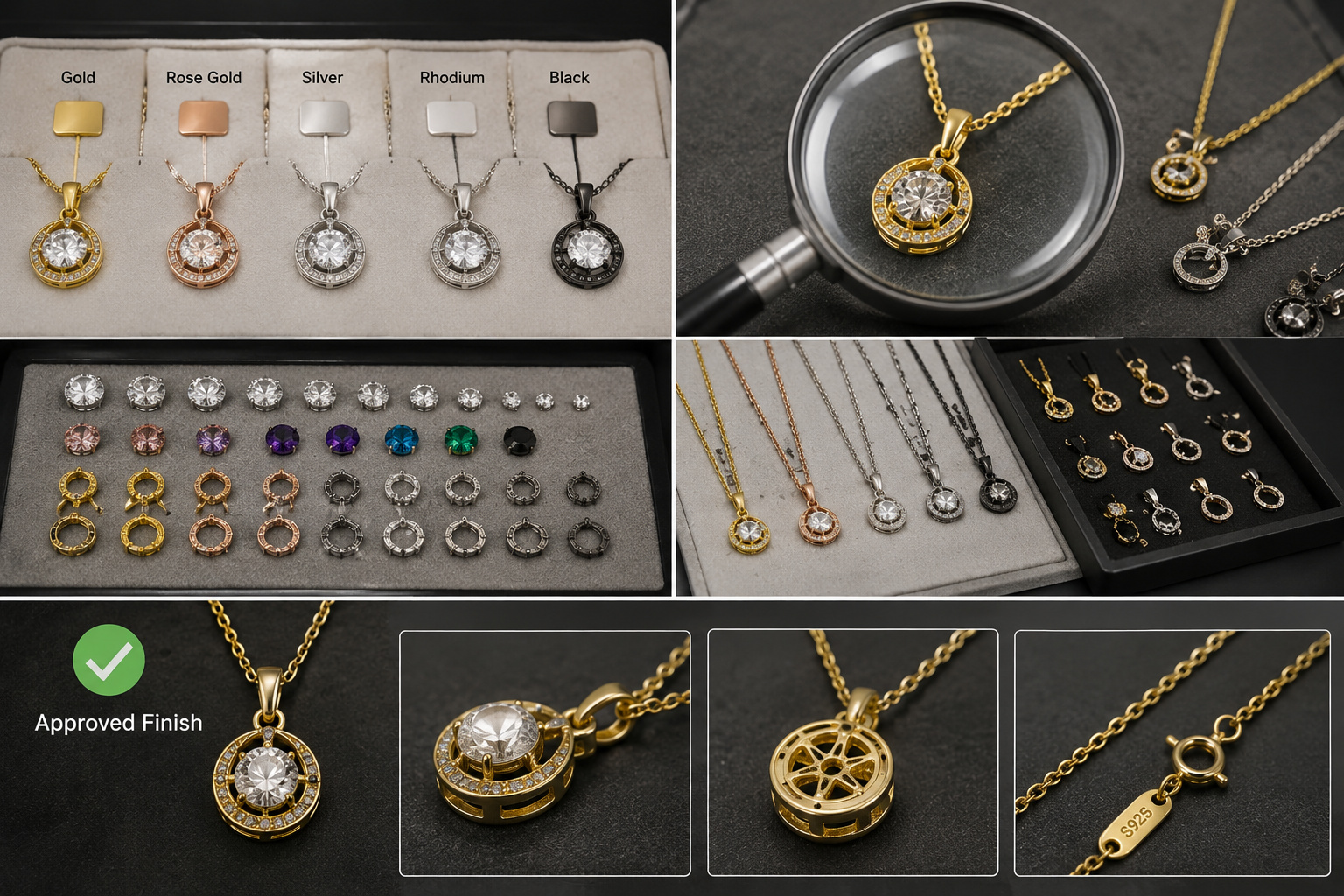
Our current range commonly uses CZ, glass stones, faux pearls, resin and other approved decorative parts according to the design. Buyers should confirm stone size, color, shape, position and overall appearance before mass production.
For styles with multiple components, the combination of base metal, plating and decorative parts should be reviewed together. A change in stone size or component construction can affect dimensions, setting position and final appearance.
Sample Comparison Before Approval
Material and finish should be confirmed on the physical sample before the order enters bulk production.
Important comparison points include:
- Base material
- Product dimensions
- Plating color
- Surface appearance
- Stone or decorative component
- Color consistency
- Overall workmanship
Where several finish options are being considered, side-by-side samples are often more useful than reviewing separate photographs because lighting can change how metal colors appear.
 How Material Choices Affect MOQ and Lead Time
Typical MOQ is around 100–300 pcs per style. Projects requiring special materials, new components, deeper customization or additional sample development may require around 300–500 pcs or above.
Sampling normally takes around 7–15 days, depending on the material, plating, components, mold requirements and finishing complexity. Once the material and finish are approved, standard bulk production usually takes around 25–35 days after sample approval.
Late changes to base material, plating color or decorative components can require a revised sample and may affect production timing.
What We Need to Review Your Finish Requirement
For a more accurate quotation and sampling plan, please provide:
- Jewelry design or reference photo
- Preferred base material
- Product dimensions
- Target plating color or finish reference
- Stone or decorative component requirements
- Estimated order quantity
- Target market if relevant to the specification
If the exact material or finish has not been decided, we can review the design and target positioning first and identify practical options for sample development.